Case prepared by: Ameen
Rehab strategy for Post-surgical Recurrent Shoulder Dislocation
Patient profile
- Age/Gender: 28-year-old Male
- Occupation: MBA Student
CHIEF COMPLAINTS:
Recurrent bilateral shoulder dislocation with reduced confidence during overhead sports activities.
HISTORY:
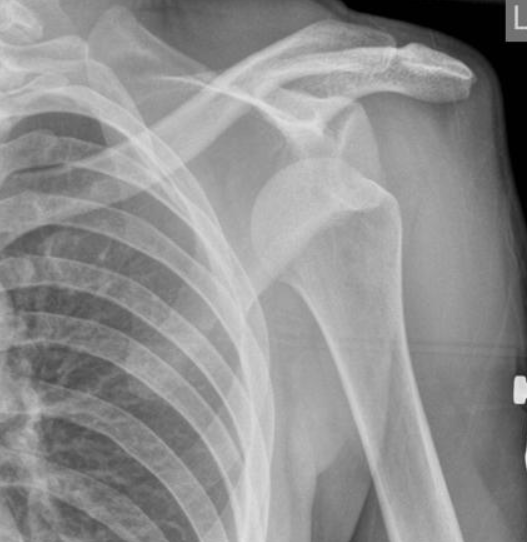
The patient had his first dislocation in the right shoulder in 2015 while playing basketball. Following this, he experienced frequent recurrent episodes and was able to self-relocate the shoulder. MRI evaluation revealed a Bankart lesion, for which he underwent Bankart repair surgery.
In 2019, he sustained a similar dislocation of the left shoulder and underwent the same surgical procedure.
Following both surgeries, his activity level significantly reduced. His rehabilitation consisted mainly of self-directed strengthening exercises learned through social media, without a structured return-to-sport progression.
In 2024, after returning to basketball, his right shoulder dislocated 4–5 times, prompting him to begin shoulder rehabilitation, after which the episodes stopped.
However, in January 2026, he sustained another traumatic fall while descending stairs, resulting in a second dislocation of the left shoulder. He was immobilised in a sling and stopped participating in basketball.
Seeking long-term recovery and confidence in returning to sport, he consulted us for comprehensive rehabilitation of both shoulders.
Past Medical/Surgical History
- History of recurrent dislocation of both shoulders.
- Bankart repair was done on both shoulders.
Lifestyle and psychosocial analysis:
Physical Activity Status:
Active. He has been regularly going to the gym and doing workouts at light intensity.
Sleep Level:
He has good, uninterrupted sleep for 6–7 hours.
Stress Level:
Psychosocial Factors
- Cognitive – The patient demonstrates positive beliefs regarding recovery.
- Affective – Reduced confidence due to fear of recurrence.
- Social – Strong family and social support system
PAIN ANALYSIS:
- Intensity– 3/10
- Onset– Sudden
- Aggravating factor– badminton smash, forceful throw, shoulder abduction and reaching back, overhead activities
- Relieving factor– rest
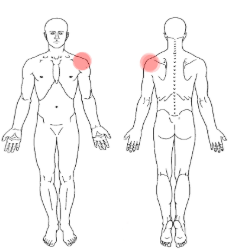
- Location– diffuse over the left shoulder
- Lifestyle factor impact– avoids sports participation due to fear of redislocation.
- Fear of movement analysis– fear of overhead activities, and playing sports.
Our Understanding Of Patient’s Problem
This case highlights a common issue seen after surgical stabilisation:
Surgery restores structural stability, but inadequate rehabilitation often leaves unresolved deficits in mobility, neuromuscular control, dynamic stability, and sport-specific capacity and may increase the risk of recurrence.
We have to assess further to determine whether he is having a congenital loose shoulder or it’s just a traumatic recurrent instability, and to determine what the things are to focus on in the rehab.
Patient Goal:
To prevent future dislocations and return to recreational basketball confidently.
PHYSICAL EXAMINATION:
Observational findings:
Nil significant.
Palpation
No pain on palpation
ROM Analysis:
| Movement | Right | Left |
|---|---|---|
| Shoulder Flexion | 180 degree | 170 degree |
| Shoulder Abduction | 180 degree | 170 degree |
| Shoulder External rotation | 90 degree | 80 degree |
| Shoulder Internal rotation | 90 degree | 90 degree |
Mobility screening
- Shoulder overhead flexion mobility- slightly reduced on the left side
- Thoracic rotation- slightly reduced on the left side
Stability screening
(Measured after 1.5 months of rehabilitation due to initial pain and mobility limitations)
| Right | Left | Percentage | |
|---|---|---|---|
| Chest support row 15 kg dumbbell | 24 | 22 | 109 |
| Biceps curl 15 kg dumbbell | 8 | 10 | 80 |
| Shoulder press 15 kg dumbbell | 8 | 8 | 100 |
| Triceps extension 5 kg dumbbell | 25 | 25 | 100 |
| Chest press 15 kg dumbbell | 20 | 21 | 95 |
Based on the data we obtained, his strength has improved and he has achieved a strength symmetry of above 90 per cent. This is a good indication to progress more on plyometrics
Special Test
Apprehension Test: Positive bilaterally
This suggested persistent instability-related fear and residual anterior shoulder apprehension.
INVESTIGATION:
Differential Diagnosis
Recurrent shoulder dislocation - congenital
Clinical features:
- Congenital hyperflexibility
- Recurrent dislocation without involvement of trauma
- Starts from childhood
- Low energy instability
- Ligament laxity seen on MRI
Diagnosis
UNSTABLE SHOULDER (TORN – LOOSE SHOULDER – trauma related)
The patient has recurrent shoulder dislocations resulting in pain, weakness, and fear of redislocation.
Key clinical features supporting diagnosis:
- History of traumatic dislocations
- Bilateral surgical stabilization
- Recurrent episodes after return to sport
- Reduced mobility
- Positive apprehension test
- Fear-driven movement avoidance
Rehabilitation Strategy
Since the goal was safe return to sport, rehabilitation required a minimum 12-week progressive loading framework.
Primary Treatment Goals
- Restore pain-free mobility
- Improve scapular and glenohumeral stability
- Build strength symmetry
- Develop plyometric capacity
- Address fear of movement
- Restore sport-specific confidence
12-Week Progressive Rehabilitation Framework
| TIME FRAME | TARGET | SAMPLE EXERCISES |
|---|---|---|
| 1st week | Pain re-education, improving shoulder mobility safely, and isometric shoulder muscle activation |
|
| 2nd week | Controlled mobility progression, improved scapular control |
|
| 3rd week | Initiate isotonic strengthening, rotator cuff activation, along with shoulder mobility exercises |
|
| 4th week | Early closed-chain shoulder exercises |
|
| 5th week | Strength development (concentric + eccentric) |
|
| 6th week | Strength progression, improving unilateral control |
|
| 7th week | Advanced strength + neuromuscular control |
|
| 8th week | Introduction to power (low load, controlled speed) |
|
| 9th week | Plyometric progression, rate of force development |
|
| 10th week | High-velocity strengthening, dynamic control |
|
| 11th week | Advanced plyometrics, sport-specific preparation |
|
| 12th week | Return-to-sport phase, functional testing |
|
Key Clinical Message
This case reinforces an important rehabilitation principle:
Surgery restores passive stability. Rehabilitation restores active stability.
For recurrent shoulder instability, especially in athletic individuals, long-term success depends not only on structural repair but on:
- Progressive loading
- Neuromuscular control
- Psychological readiness
- Sport-specific exposure
By addressing both physical capacity and movement confidence, we can significantly enhance return-to-sport outcomes and reduce the risk of redislocation.